




Date de publication : 28/10/2026
Window squeegee noise can indicate worn rubber, excessive pressure or incorrect technique. Identify the cause and restore fast, streak-free results.
A noisy window squeegee is more than just an annoyance for the operator or anyone on the other side of the glass. It is usually a clear sign that the rubber is not gliding as it should. If you also notice haze, water lines or areas that have not dried, it is worth checking the whole setup before applying more pressure or repeating passes that reduce productivity.
A professional window squeegee should move with a controlled, continuous glide. A slight rubbing sound may be noticeable on certain surfaces, especially when there is little liquid on the glass, but a high-pitched squeak, vibration or repeated judder indicates an imbalance between the rubber, surface, cleaning solution and technique. Identifying the cause can restore speed and an even finish without replacing parts that are still usable.
What noise from a window squeegee indicates
The sound occurs when the rubber edge catches and releases against the glass in very rapid cycles. This irregular movement creates vibration in the channel and handle. There is not always a single cause: slightly hardened rubber, glass with adhered dirt and excessive pressure can combine to turn a normal pass into slow, imprecise work.
The first consideration is when the noise occurs. If it happens from the start of the day on every pane of glass, the rubber or assembly should be checked immediately. If it appears only on one façade, shop window or particular area, the problem may be surface residue, glass treatments, building dust or product residue affecting the glide.
The direction also matters. A squeegee that squeaks only when closing the S-motion usually indicates a change in angle or pressure. If the sound is present during both straight movements and turns, the rubber is more likely to be fatigued, contaminated or incorrectly seated in the channel.
The most common causes of squeaking
Worn, hardened or contaminated rubber
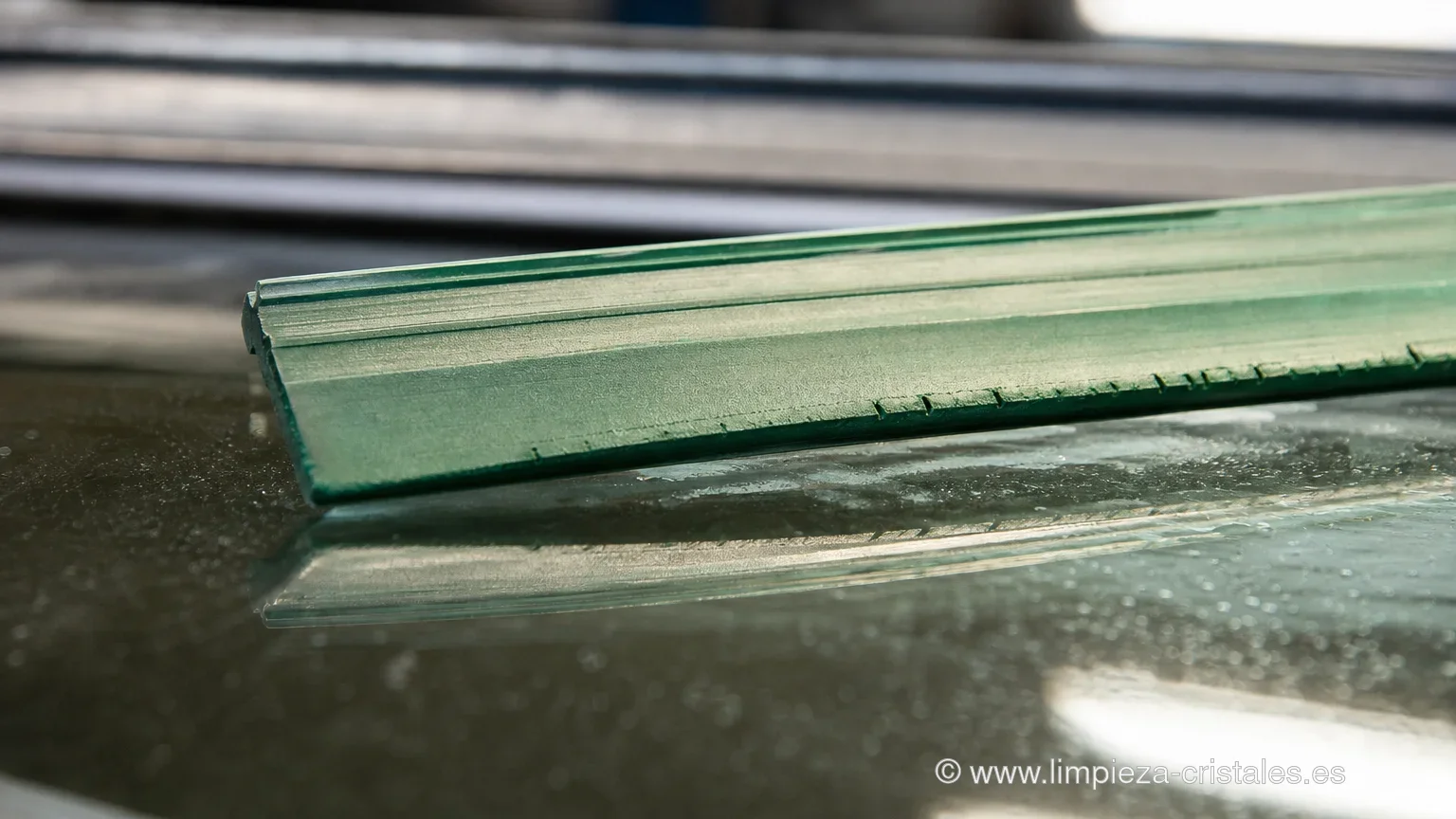
The rubber is the element that determines the finish. With use, the edge loses its regularity, hardens or accumulates very fine particles. It may look suitable at first glance, but a small nick in the edge is enough to create resistance, noise and a water line on every pass.
Before replacing it, remove the rubber from the channel and clean both it and the holder. Check that no sand, dust or adhesive residue is trapped in the grooves. Then examine both edges in good light. On many professional models, the rubber can be turned around and the opposite edge used if it remains straight and undamaged. If both sides are wavy, cut or have lost their flexibility, replacing it is the most efficient option.
It is not worth extending the life of worn-out rubber to save on a replacement. The operating cost of repeating panes, correcting marks and slowing the operator down is usually much higher. For cleaning companies, carrying compatible replacement parts in the vehicle prevents interruptions during shop-window, communal-area or office-maintenance routes.
Insufficient lubrication during work
An excessively dry surface increases friction and makes squeaking more likely. The washer should leave an even film, with no dry areas, before the window squeegee is used. If the glass dries too quickly because of temperature, direct sunlight or draughts, divide the pane into smaller areas and work without delays between washing and drying.
The cleaning solution should help the rubber glide without leaving residue. An excessive concentration can create a sticky film; insufficient application can cause the rubber to grip the glass. The correct adjustment depends on the dirt, temperature and type of glass. There is no universal dilution that works for every commercial, building-site or periodic-maintenance situation.
Incorrect angle and pressure
Noise is not corrected by pressing harder. In fact, excessive pressure deforms the rubber edge, increases contact with the glass and encourages juddering. Pressure should be light and consistent—enough to remove the cleaning film without unnecessarily bending the channel.
The angle also matters. With an angle that is too narrow, the rubber drags instead of cutting through the water. With one that is too wide, it loses contact and leaves marks. The operator should find a consistent contact point, keep the wrist relaxed and change the inclination progressively when changing direction. When using an S-motion technique, sudden turns are a frequent cause of vibration.
When working with a pole, this adjustment requires even more attention. Distance amplifies any excess force applied from the ground. An articulated handle or a suitable squeegee setup can help, but it cannot replace rubber in good condition or controlled technique. If the noise starts when working at height, first try reducing the pressure and check that the rubber is perfectly aligned.
Deformed channel or incorrect assembly
The channel holds the rubber and must keep it straight along its entire length. A drop, impact against a frame or continuous lateral pressure can deform it slightly. When this happens, the rubber does not contact the glass evenly: one end may squeak, leave water or require more force than the other.
Check that the ends are correctly positioned and that the rubber does not protrude unevenly. Also check the channel's attachment system to the handle. Excessive play does not always cause noise, but it does transmit vibration and reduce precision when changing direction. In long channels, a small deviation is especially noticeable on large panes and high-repetition jobs.
Before blaming the tool, check the glass
Not all glass reacts in the same way. Adhered silicone, paint, mineral dust, limescale or other contaminants increase friction and can produce a sound even with new rubber. In these cases, repeatedly using the window squeegee does not solve the underlying problem and may damage the edge prematurely.
First, remove ingrained dirt with the appropriate tool and check that the surface is suitable for the chosen procedure. A scraper is used to remove adhered residue when the type of glass and its instructions allow it; it does not replace the window squeegee and should not be used automatically. Once the surface has been prepared, the washer and squeegee can return to their normal performance.
Glass with certain surface treatments may also require preliminary testing in an inconspicuous area. The aim is to validate glide, drying and compatibility before working on an entire façade or shop window.
When to replace the rubber and when to adjust your technique
Replace the rubber when the noise persists after cleaning and turning it and checking the channel, or when it leaves repeated lines in the same place. Replacement is also recommended if it has lost elasticity or its edge shows visible nicks. These are signs of functional wear, not merely cosmetic details.
Adjust your technique when the rubber is straight, clean and new, but the sound appears only when changing direction, working with a pole or adopting certain positions. In that situation, reducing pressure, wetting the surface evenly and correcting the angle will often produce an immediate improvement.
The best test is simple: fit rubber in good condition, work on a previously prepared pane of glass and make several passes using moderate pressure. If the noise disappears, the cause was the rubber or the assembly. If it remains, check the surface, cleaning solution and technique.
Choosing replacement parts to maintain performance
Compatibility between the rubber, channel and handle prevents lost time on site. For a professional who works every day, it is not enough for the rubber to physically fit the channel: it must sit firmly, maintain the correct tension and allow a quick change when the edge reaches the end of its service life.
It is worth choosing the channel length according to the type of work. Short formats provide control on divided panes, frames and interior areas; longer ones improve performance on large panes once the technique is established. A well-configured setup reduces passes, fatigue and the need for touch-ups.
At Limpieza Cristales Unger, technical advice and Unger technical support in Spain help identify suitable replacement parts and configurations for each professional application. Checking before combining components is particularly useful when working with poles, specific channels or tools subject to intensive use.
A squeak should not be accepted as part of the job. A quiet, stable and correctly adjusted window squeegee allows you to focus on technique, maintain a steady rhythm and deliver clean glass without turning every pass into a correction.