




Date de publication : 15/10/2026
Learn how to remove silicone from glass without scratching it, using scrapers, solvents and professional techniques for fresh or cured building-site residue.
An untidy bead of sealant, splashes left after installing a shower screen or building-site residue around a frame can turn an immaculate pane of glass into a surface covered in visible marks. To remove silicone from glass without damaging it, simply scrubbing harder is not enough: you need to identify the type of residue, cut through the layer in a controlled manner and remove greasy deposits without compromising seals, profiles or surface treatments.
The method varies depending on whether the silicone is fresh, partly hardened or fully cured. The working environment also matters. You will not approach a shop window, an external glazed enclosure, a shower screen or glass installed at height in the same way. The professional priority is always the same: remove the sealant with as few passes as possible, without scratching the glass and without leaving a film that becomes visible when the light strikes it at an angle.
Before removing silicone from glass: inspect the surface
Standard glass allows controlled mechanical removal, but first check whether it has a special coating, protective film, nearby screen printing or vinyl, or a treated surface. In these cases, a poorly positioned blade or unsuitable chemical product can cause permanent damage.
Also inspect the edges. Silicone often bonds firmly to rubber seals, painted profiles, aluminium, PVC and painted areas. A solvent capable of softening the residue may affect these materials if it is applied excessively or left to work for too long. For this reason, test the product in an inconspicuous area before treating the whole surface, and control it with a cloth rather than spraying indiscriminately.
Lighting is another part of the assessment. Side lighting reveals transparent strands, greasy haze and blade marks that are not visible when viewed straight on. In professional window cleaning, checking the finish from several angles avoids having to repeat the work, particularly on large panes or jobs where access is limited.
The right tools for removing sealant
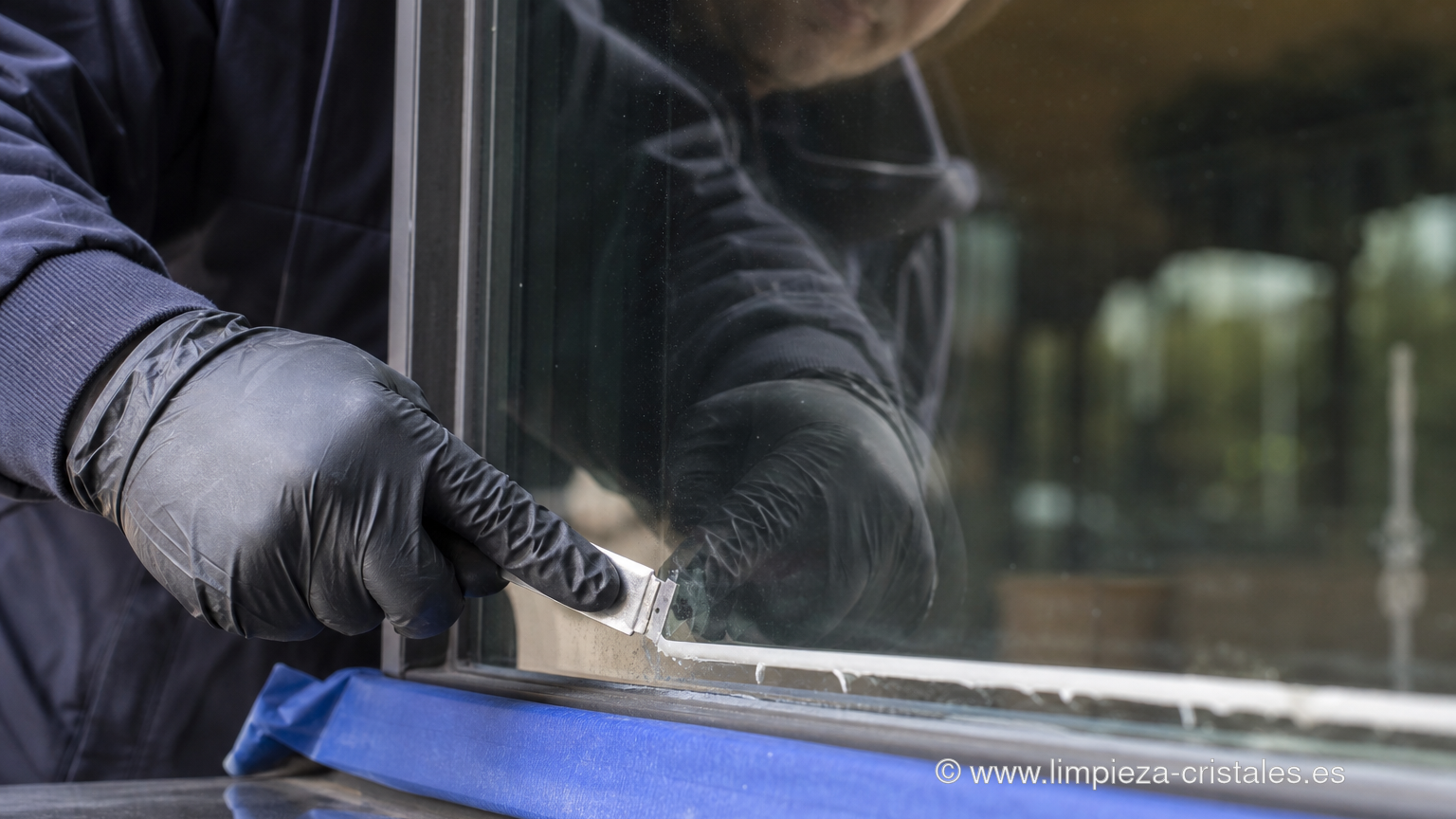
The main tool for adhered residue is a glass scraper with a blade. It must be in good condition, clean and fitted with a perfectly straight blade. A rusty, chipped or excessively reused blade does not cut evenly: it drags particles across the surface and increases the risk of leaving micro-scratches.
For larger areas, a professional-format scraper provides greater stability and helps you maintain a consistent angle. A compact format is more precise around edges, corners and narrow beads. The choice depends not only on the size of the mark, but also on access and on whether the blade can be kept flat against the glass.
The window squeegee is used after mechanical removal. Its purpose is to clear away the cleaning solution and dissolved residue without leaving lines. Fit a clean rubber blade with an even edge that is compatible with the channel. Worn rubber can leave trails that are mistaken for silicone residue and unnecessarily extend the job.
You will also need a quality washer, clean microfibre cloths and, when necessary, a product specifically designed for the final degreasing stage. For recurring work, keeping replacement blades and rubber channels or blades to hand avoids having to improvise with worn tools at the most delicate point in the process.
How to remove fresh silicone from glass
When the silicone has not yet cured, work quickly but not roughly. First remove the excess with a dry, lint-free cloth or a plastic scraper if the sealant is close to sensitive profiles. Avoid spreading it over a larger area: a circular movement can turn a localised splash into a difficult-to-see film that is even harder to remove.
Then clean the area with a product compatible with glass and dry it with a clean cloth. If a greasy film remains, apply the degreaser in a controlled manner to the cloth, work in straight passes and finish with a washer and window squeegee. The aim is to lift the residue, not to saturate seals or frames.
With newly applied sealant, keep a safe distance from the bead that needs to remain in place. When cleaning nearby marks, it is easy to disturb the edge of a fresh seal. In this situation, it is better to protect the boundary and focus only on the contaminated glass.
How to remove cured silicone from glass, step by step
Cured silicone requires a combination of mechanical cutting and finish cleaning. Start by wetting the glass with the working solution. The layer of moisture helps the blade glide and reduces direct friction against the surface.
Position the scraper at a low angle, approximately 20 to 30 degrees, and move it forward without applying excessive pressure. The blade should remain flat and move in one direction. Do not scrape dry, do not use a back-and-forth motion and do not attack the residue with the corner of the blade. These three practices create the greatest risk of marking the glass.
If the bead is thick, first remove most of it with several gentle passes rather than trying to tear it off in one go. Once only thin strips or a translucent film remain, use a glass-safe residue remover, following the application time recommended by its manufacturer. Apply a small amount to a cloth, leave it to work only for as long as necessary and go over the area again with the scraper if the product has softened the residue.
Finish by washing the entire area, not just the treated spot. The washer distributes the solution and collects small particles; the window squeegee removes the liquid in one continuous pass. Dry the edges with microfibre and inspect the surface against the light. If shadows or rings appear, there is usually no solid silicone left; instead, a greasy film remains and requires a second controlled degreasing treatment.
When to avoid using a blade
There are situations in which a scraper is not the first choice. With glass fitted with film, panes with unidentified surface treatments, screen-printed surfaces or panels where there is a risk of contaminating a delicate seal, prioritise a very localised chemical test and non-abrasive cloths.
It is also advisable to stop if adhered mineral particles are detected. Cement, dried paint, building dust or sand can become trapped under the blade and scratch the glass even when the technique is correct. Before continuing, wash the surface thoroughly, remove loose dirt and replace the blade if it has touched an edge or a contaminated area.
Mistakes that increase the cost of cleaning work
The most common mistake is using a worn blade to save the cost of a replacement. In professional cleaning, a new blade costs less than the time needed to correct a poor finish or deal with an incident involving marked glass. The second mistake is applying solvent directly over the entire pane, creating an unnecessary risk to rubber seals and profiles.
Avoid abrasive scouring pads, sandpaper, aggressive discs and improvised tools. They may seem effective at first, but they leave haze or scratches that become obvious in daylight. Silicone is removed through controlled cutting and selective dissolution, not abrasion.
Another common mistake is considering the job finished without inspecting the edges. Product build-up where the glass meets the profile becomes visible again once it dries. A final pass with a folded, clean microfibre cloth allows you to work along this line without dirtying the pane again.
Professional equipment for repetitive work
When silicone removal forms part of post-construction cleaning, shop-window maintenance or the preparation of glazed enclosures, productivity depends on using a coherent system. Scrapers with spare blades available, washers that hold enough solution, window squeegees with rubber in good condition and compatible extension poles for high panes reduce interruptions and improve the consistency of the finish.
On difficult-to-access external surfaces, first assess whether the residue can be removed safely from the ground or whether specialist access is required. A scraper should not be used at the end of an extension pole without well-established technique, especially near seals, edges or areas where you cannot check that the blade is properly supported. Safety and visual control take priority over speed.
When selecting tools, replacement parts and systems suitable for professional operations, specialist advice makes a real difference. Limpieza Cristales Unger, as an Unger Service Centre in Spain, can advise on compatibility between handles, channels, rubber blades, scrapers and working solutions, helping to keep equipment operational with replacement parts readily available.
Glass free of silicone should not reveal where the mark was or how it was removed. The difference between an acceptable result and a professional finish lies in controlling every stage: a clean blade, a low angle, carefully measured product application and a final inspection that leaves no unpleasant surprises when the light changes.