




Date de publication : 15/11/2026
A household cloth and spray bottle may work for a small pane, but they become a waste of time when cleaning large windows, shopfronts or façade glazing panels. To clean large windows efficiently, the result depends
A household cloth and spray bottle may work for a small pane, but they become a waste of time when cleaning large windows, shopfronts or façade glazing panels. To clean large windows efficiently, the result depends less on scrubbing harder and much more on combining the right method, tools suited to the job and safe planning. The professional objective is not simply to leave the glass clean: it is to cover more surface area per working day, without marks, unnecessary fatigue or compromising the operator’s safety.
Before cleaning: assess the job, not just the glass
A large pane may be at ground level, have deep joints, delicate frames or be several metres above the working level. Each situation requires a different setup. Cleaning a large internal screen with a window squeegee is not the same as maintaining the external windows of an office or a glazed façade.
Before preparing the equipment, it is worth assessing four factors: working height, the type and level of soiling, accessibility and maintenance frequency. Recent dirt from rain, dust or fingerprints responds well to a quick manual method. By contrast, bonded deposits, environmental pollution or accumulated exterior dirt may require pre-treatment and, where access allows, a pure-water system with a pole.
The surroundings must also be considered. Direct sunlight accelerates the drying of the solution and encourages marks, while wind can make it difficult to control a pole and blow dirt onto glass that has just been finished. Efficiency does not mean applying the same process every time, but choosing the process that avoids repeat work.
Tools for cleaning large windows efficiently
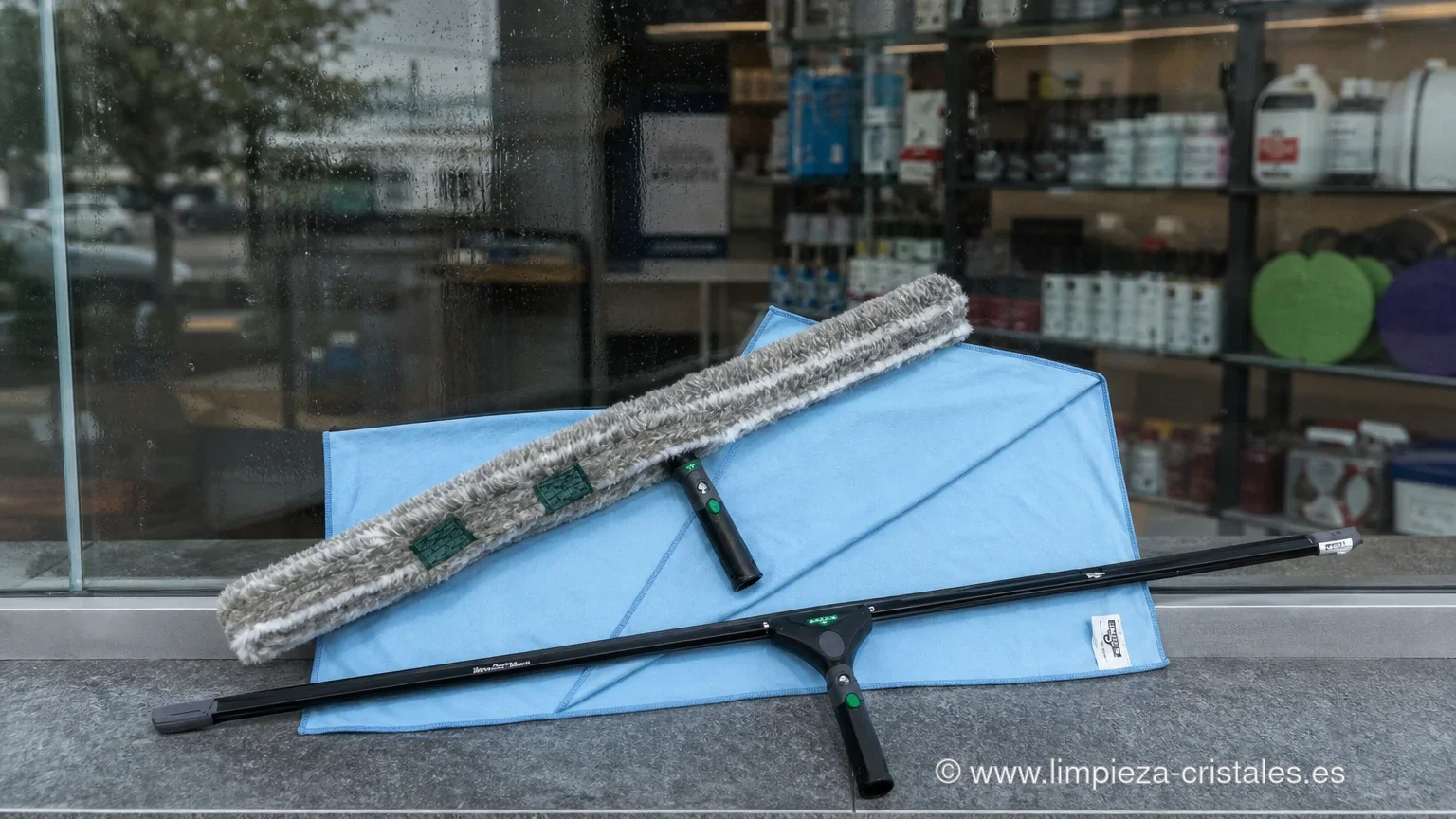
On large surfaces, the tool must cover more glass with each pass without sacrificing control. A professional window squeegee of a suitable width, an absorbent washer and a rubber blade in good condition are the basis of manual work. The rubber blade is a critical consumable: if it has hardened, split or become deformed, it leaves water lines and forces you to go over areas that should have been finished first time.
The choice of squeegee width depends on the surface and the operator’s skill. A wider channel reduces the number of passes on large panes, but is not always the best option for divided windows or narrow frames. Working with an excessive size can reduce precision at the edges and increase wrist strain. For recurring maintenance, having several widths allows the equipment to be adapted instead of forcing one tool to do every job.
The washer must hold an even amount of solution. If it is too dry, it will not remove the dirt; if it is saturated, it will create excess water around frames and joints. To prevent drips, wring it out in a controlled manner before starting and reload it when it loses its cleaning capacity, not after the glass has already partly dried.
A professional bucket helps maintain this workflow. It provides stability, allows equipment to be carried and helps keep clean tools separate from used accessories. In continuous operations, these small organisational savings have a direct impact on productivity.
Use a scraper for bonded dirt, not as a substitute for washing
Adhesive residue, building-work splashes, paint or dried dirt require a suitable scraper and a blade in good condition. It should be used on wet glass, at a controlled angle, with a preliminary test in an inconspicuous area when the type of glass or coating is unknown.
The common mistake is to use the scraper as a quick solution across the entire surface. This slows the work and increases the risk of scratching if abrasive particles are present. First remove the heavier dirt and lubricate the surface properly; then use the washer and squeegee for the finishing stage.
The manual method that reduces passes and marks
The order of work is just as important as the equipment. Start with frames, profiles and corners, because dirt accumulated in these areas can be dragged onto the glass if they are cleaned last. If the frame releases soil or debris during the process, the newly finished glass will need another pass.
Wet the glass pane evenly with the washer, working in sections if the surface is particularly large. Do not leave dry areas between passes. On large-format glass, mentally dividing the pane into sections helps maintain control and prevents the solution from drying before the water is removed.
With the squeegee, a fan technique can be used once you have mastered wrist rotation and control of the rubber blade. It is fast and leaves few edges to touch up. If the glass has divisions or obstacles, or maximum speed is not required, straight, overlapping passes provide a more predictable result. In both cases, dry the rubber blade frequently so that it does not deposit water on the next pass.
Finishing the edges requires a clean, low-lint cloth. The aim is not to wipe the entire pane as a matter of routine, but to remove residual moisture from joints, corners and the bottom edge. Rubbing the centre of the glass with a cloth after using the squeegee correctly often introduces fibres and marks where there were none.
Outdoor and high-level work with a pole
When exterior glass cannot be reached from the ground, a pole reduces movement and avoids the need for more complex access equipment on jobs suited to this system. However, a pole that is too long or incorrectly configured can cause fatigue, loss of precision and a slower working pace. The practical rule is to use the shortest length that safely reaches the working area.
For traditional-method maintenance, an adjustable head allows the washer or squeegee to be angled towards the glass. This solution works particularly well on tall shopfronts, canopies and easily accessible exterior windows. It requires practice to maintain pressure and prevent water from falling onto surfaces that have already been finished.
On façade panels, high windows or repetitive ground-based work, pure-water systems offer a highly productive alternative. Water treated for professional cleaning dissolves and carries away dirt using specialised brushes. When it dries, it does not leave the mineral residues that cause rings or marks, provided the system is correctly maintained and rinsing is sufficient.
Not every exterior job requires pure water. Glass with bonded grease, silicone residue, building-work dirt or heavily compacted pollution may need an initial manual wash. The advantage becomes clear during periodic maintenance: once the surface has been restored, a pole and brush allow large areas to be cleaned regularly with less time spent repositioning.
Mistakes that increase costs
Most marks are not caused by one isolated technical mistake, but by poorly maintained equipment. Worn rubber blades, cloths saturated with dirt, deformed channels and washers with little absorbency all force repeat passes. Replacing a worn component in good time costs less than spending extra minutes on every pane throughout an entire working route.
Another common problem is choosing a pole solely for its reach. Its weight, rigidity, locking system and compatibility with accessories determine how it performs over hours of use. In professional work, a pole that flexes excessively can reduce precision at the brush or head, particularly at maximum extension.
Nor should every pane be treated as though it were the same. Glass with films, special treatments, screen printing or ageing sealants may require specific precautions. If in doubt, the professional approach is to test an inconspicuous area, inspect the condition of the surface and adjust the method before working on the entire pane.
Build an equipment setup that supports continuity
Efficient purchasing is not about buying isolated items, but about assembling a compatible system: squeegee, washer, replacement rubber blades, bucket, cloths, scraper and, when the job requires it, a pole and pure-water accessories. This continuity makes replenishment easier, reduces downtime and allows each operator to maintain a consistent technique.
Limpieza Cristales Unger provides not only professional tools but also the technical expertise to configure equipment according to height, frequency of use and installation type. As an Unger service centre in Spain, it can advise on compatibility, replacement parts and maintenance so that your investment continues to perform over the course of many jobs.
The best operational improvement often starts with one specific change: replacing a rubber blade that no longer cuts properly, choosing a more suitable channel width or switching to a pole that matches the actual access requirements. When every tool has a precise function, large windows stop being a slow job and become a controlled, profitable and safe routine.