




Date de publication : 14/11/2026
A hotel cleaning case study rarely involves simply leaving the glass clean before guests arrive. In a hotel, a marked shower screen, a fingerprint-covered entrance window or a neglected exterior glazed area immediately affects how guests perceive the serv
A hotel cleaning case study rarely involves simply leaving the glass clean before guests arrive. In a hotel, a marked shower screen, a fingerprint-covered entrance window or a neglected exterior glazed area immediately affects how guests perceive the service. The challenge for the cleaning and maintenance team is to achieve a consistent finish without disrupting reception, food service, circulation areas or occupied rooms.
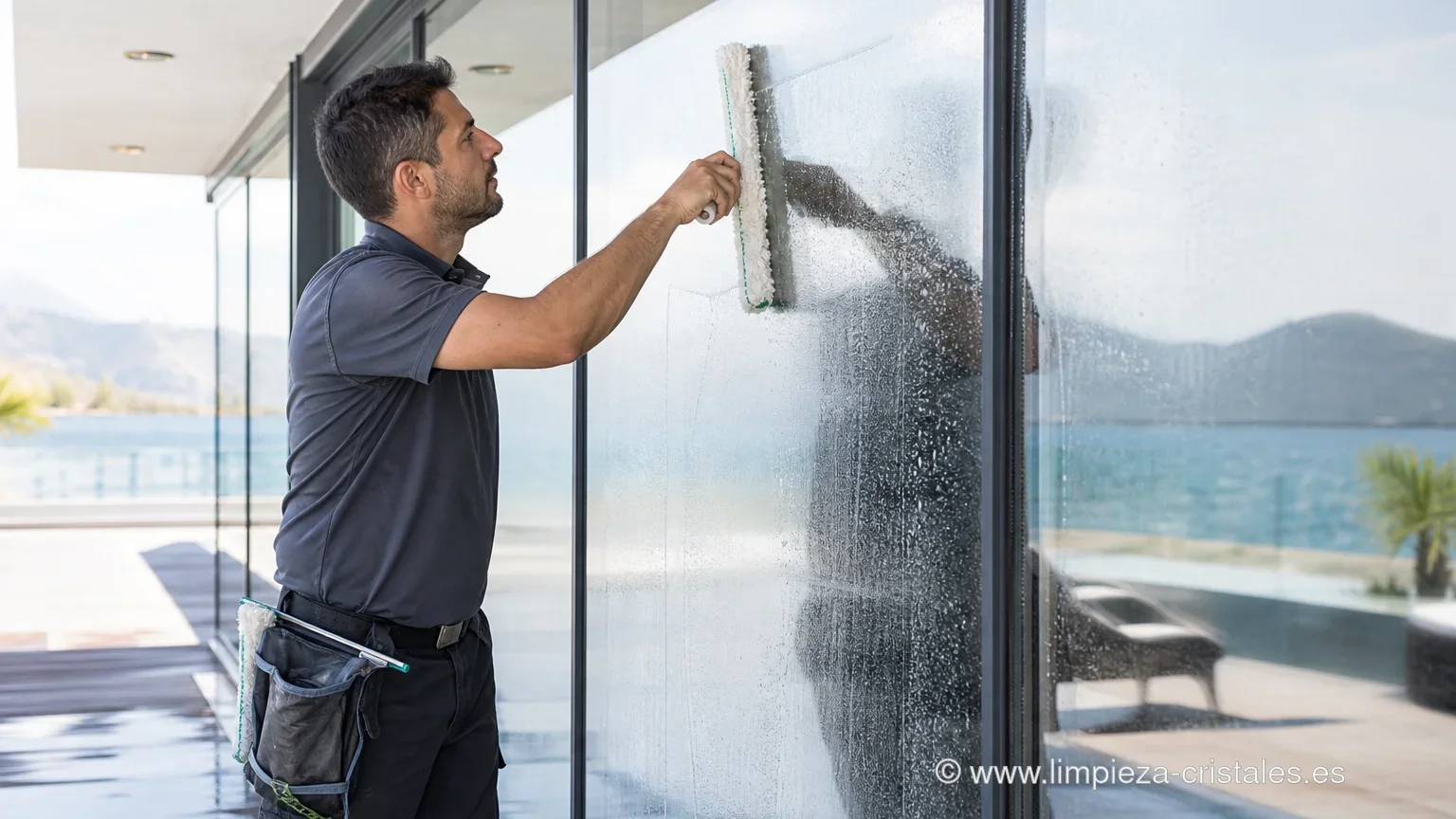
The answer is not simply to assign more time or more staff. It lies in defining which surfaces are cleaned, how often, from which access point and with which tools. A professional window squeegee, a suitable washer, blades in good condition and a correctly configured water-fed pole reduce touch-ups and help maintain the pace of work, even in busy premises.
The starting point in a hotel cleaning case study
Consider a property with a glazed entrance, lobby, panoramic lifts, bathroom shower screens, mirrors, windows in communal areas and exterior glazing. Each area presents different requirements. It makes no sense to use the same procedure for an interior shower screen as for a multi-storey façade or glazing above a canopy.
The first operational mistake is usually treating all glass as one generic task. This leads to unnecessary travel, constant tool changes and inconsistent results. A good approach separates detailed cleaning, daily maintenance routes and periodic high-level work.
In the lobby and entrance doors, the priority is a rapid response. These surfaces are touched constantly and need to be checked several times a day. By contrast, high-level atrium windows can be scheduled at defined intervals and cleaned outside peak activity periods. Planning depends on occupancy, the external environment, the type of glass and the level of exposure—not on one fixed frequency that applies to every hotel.
Identify the type of dirt before choosing equipment
Recent fingerprints, splashes and light dust require a swift intervention. A correctly loaded washer, a window squeegee with a blade in good condition and a microfibre cloth for finishing touches are usually enough to deal with most interior tasks quickly.
The situation changes when dealing with adhered deposits, building residues, limescale or exterior pollution. In these cases, consider the controlled use of a professional scraper that is compatible with the glass and follow the correct procedure to prevent damage. A scraper does not replace a window squeegee, and using one without checking the surface can greatly increase the risk of scratching.
It is also worth checking frames, seals and sills. If the operator cleans the glass but does not remove dirt accumulated around the edges, moisture and runoff can leave marks at the end. A professional finish depends as much on the stroke technique as on preparing the entire area.
How to organise work by area and shift
In hotels, window cleaning must take place alongside guests, suppliers and internal staff. The method therefore needs to be discreet, fast and safe. Planning by area prevents the operator from crossing the building several times to find replacement parts, buckets or accessories.
An effective route might cover entrances and reception at the start of the day, communal areas during a quieter period, and shower screens or mirrors during room servicing or shift changes. Façades, internal courtyards and high-level glazing require their own work order, with a prior assessment of access arrangements and safety measures.
It is not always advisable to schedule exterior cleaning first thing in the morning. If it coincides with group arrivals, supplier deliveries or events, access becomes more difficult and productivity falls. In this situation, adjusting the timetable delivers greater productivity than speeding up the work with an unsuitable tool.
The basic equipment that prevents wasted time
For recurring interior maintenance, equipment should be compact and allow consumables to be replaced without stopping the task. A professional set-up will typically include a washer, T-bar, replacement sleeve, window squeegee, spare blades, bucket, finishing cloths and a scraper for occasional use where the surface allows it.
Ergonomics are particularly important during long shifts. A comfortable handle and a well-balanced tool reduce wrist and shoulder fatigue, which matters when cleaning dozens of shower screens or large panes of glass. The cheapest option does not always reduce the real cost: a blade that leaves lines means repeating the stroke, uses more time and damages the image of the service.
Equipment maintenance is just as important. Blades should be replaced when they lose their edge or start leaving water at the ends. Washer sleeves should be washed and stored correctly. A distorted T-bar, a damaged channel or a water-fed pole with faulty clamps can compromise both the finish and safety.
High-level glazing: reach without improvisation
Atriums, glazed roofs, skylights and internal façades are common in modern accommodation. In these areas, climbing a ladder to deal with a quick task can be a poor decision. As well as affecting customer traffic, it requires the area to be controlled and does not always provide the safest or most efficient working position.
A telescopic pole allows high-level panes to be reached from the ground when access conditions permit. The key is to choose the right working length, rigidity and compatibility with the cleaning head or accessory. A pole that is excessively flexible transmits movement less effectively, requires more pressure and can leave an uneven finish at height.
For recurring exterior work, pure water systems designed for professional window cleaning offer a particularly useful alternative on high-level surfaces. In certain situations, they allow operators to work from the ground with brushes and poles, reducing the need for direct access to the glass. However, they are not an automatic solution for every type of dirt: initial cleaning on heavily soiled glass may take longer and require careful brushing technique.
Before choosing a system, assess the height, working distance, perimeter access, type of dirt, maintenance frequency and operator training. The aim is not to add more equipment, but to configure a process that reduces travel, touch-ups and foreseeable risks.
Measure the result in touch-ups, not just square metres cleaned
A team may complete a glass-cleaning route quickly and still lose profitability if reception notices smears, drops in corners or visible marks when viewed against the light. It is therefore worth carrying out a visual check from the angles guests will see: the entrance, desk, lift, corridor and terrace.
This check also helps identify a common problem: choosing the wrong blade for the channel or allowing it to wear out. When a window squeegee leaves repeated lines, the cause is usually the consumable, the pressure applied, the working angle or dirt accumulated along the edge. Replacing the entire tool without diagnosing the cause increases costs without guaranteeing an improvement.
Recording issues by area makes it possible to adjust the service based on evidence. If a glazed door requires too many touch-ups, it may need shorter, more frequent checks. If exterior windows become dirty again within a few days, changing the frequency or considering a pole system may be more effective than reactively reallocating hours.
Technical support and continuity of replacement parts
In a hotel environment, a tool being out of service or the lack of a compatible blade can disrupt an entire schedule. It is therefore advisable to work with systems that offer ongoing availability of accessories and replacement parts, particularly for poles, window squeegees, washers and pure water equipment.
Limpieza Cristales Unger, as an Unger authorised service centre in Spain, can advise on configuring tools and replacement parts according to the type of installation, service frequency and required reach. This support is useful when equipment needs to be renewed without losing compatibility or when a maintenance department wants to standardise its equipment across several operators.
Professional purchasing should consider the cost of use, not just the initial price. The right configuration reduces downtime, makes consumable replacement easier and maintains a repeatable standard of finish. In hotels, that consistency is what turns an apparently minor task into a visible part of the guest experience.
When the cleaning team has the right tool for every height and type of glass, it can work with fewer interruptions and greater control. That is the principle that should guide the next replacement order: choose equipment that helps maintain the property's standards every day, rather than simply resolving today's issue.