




Date de publication : 31/10/2026
Find out what causes scratches on glass, from abrasive particles and incorrect tool use to mineral-rich water, and protect panes with professional cleaning techniques
A freshly cleaned pane of glass can look fine while it is wet, then reveal scratches as it dries or when viewed in sidelight. Understanding what causes scratches on glass helps prevent repeated cleaning, complaints and costly replacements. In most cases, the problem is not a single tool, but a combination of abrasive dirt, unsuitable technique and a failure to inspect consumables.
For a professional, distinguishing a genuine scratch from a superficial mark is the first step. Limescale, detergent residue or dragged dirt will often disappear with the right process. A scratch in the glass, on the other hand, changes the surface and cannot be removed through conventional cleaning. It is therefore advisable to inspect the glass before starting and adapt the working system to each installation.
What causes scratches on glass during cleaning
The most common cause is rubbing hard particles against the glass. Building dust, sand, cement residue, metal filings, particles from seals or airborne contamination can adhere to the surface. If a washer, cloth or squeegee is passed over these residues without removing them first, the particles are moved under pressure and can leave micro-scratches or visible lines.
The risk increases on shopfronts at street level, communal building windows, exposed façades, glazing near building sites and surfaces that have not been maintained for some time. It is also common on difficult-to-access exterior glass, where people try to work quickly without first carrying out a controlled diagnosis and decontamination stage.
Cleaning dry, adhered dirt
Running a dry cloth, paper or unlubricated tool over a dusty pane of glass is a high-risk practice. Even if the material itself seems soft, the problem is what becomes trapped between the tool and the glass. A grain of sand can act as an abrasive as it moves across the surface.
The answer is not to apply more pressure. It is to reduce pressure and use enough cleaning solution to encapsulate and remove the dirt. Where there is visible build-up, the first pass should loosen the residue without forcing contact. In professional work, real speed comes from avoiding subsequent corrections, not from skipping preparation.
Scrapers used incorrectly or with damaged blades
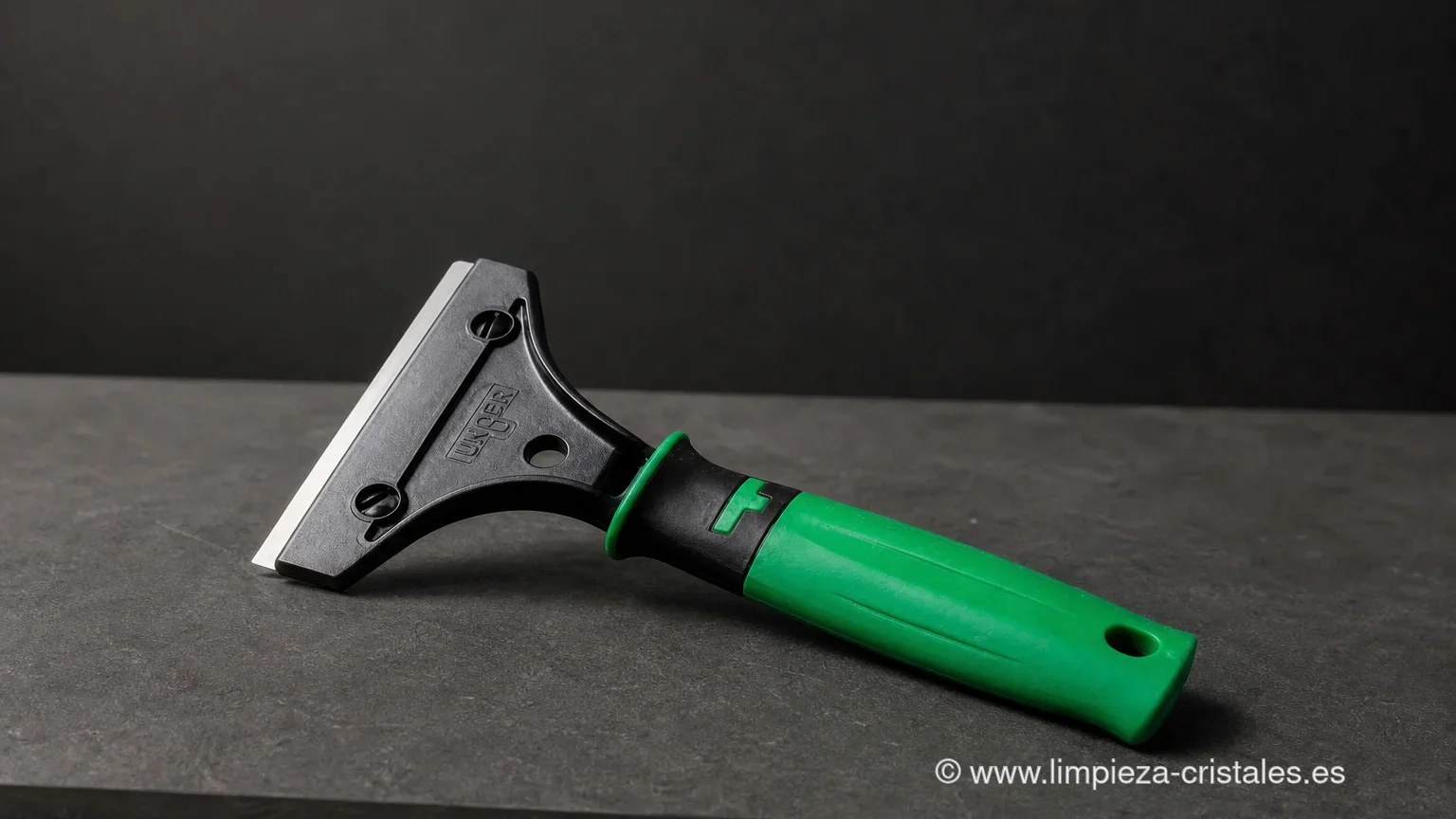
A scraper is necessary for removing paint, adhesive, splashes and isolated residues, but it must be used correctly. A blade with nicks, rust, hardened residue or a contaminated edge can scratch glass in a single pass. A new blade can do the same if it is used on dry glass, at the wrong angle or without first checking the type of surface.
Not all glass can be treated in the same way. Certain finishes, laminates, screen printing, solar-control films or treated surfaces require prior assessment. Before scraping a large area, it is advisable to carry out a discreet test and confirm that there are no sensitive coatings. The scraper should always be used with sufficient lubrication, straight strokes and without going back over trapped residue.
Replacing blades is not a minor detail. In recurring maintenance work, changing a blade at the right time costs far less than dealing with damage to a pane of glass. Storing the scraper with protection and cleaning the head after the job helps maintain a consistent, safe edge.
Contaminated squeegee rubbers and textiles
A window-cleaning squeegee delivers a clean finish when its rubber is straight, flexible and free from particles. If the rubber has cuts, deformed edges or adhered dirt, it can leave lines, drag marks and a visual effect similar to a scratch. It is not always an actual scratch, but it is still a finish defect that requires the work to be repeated.
Textiles matter too. A washer sleeve that has collected abrasive dust from a façade should not be used on delicate interior glass without being washed or replaced. Likewise, a chamois or cloth containing metal residue can mark frames and glass. Separating textiles according to their use, checking their condition and washing them correctly are part of quality control, not secondary tasks.
Excessive pressure and poor pulling technique
A window-cleaning squeegee does not need pressure to dry glass effectively. It needs a rubber blade in good condition, a compatible channel and a properly wet surface. When an operator compensates for worn rubber by pressing harder, the risk of dragging particles and leaving marks around the edges increases.
Technique is particularly important on large panes. A controlled pass, with a regular overlap and cleaning of the edge between movements, reduces residue. By contrast, abrupt changes of direction, resting the tool on dirty corners and repeated corrections on dry glass all impair the result. Handle ergonomics and tool stability also matter: a system that can be handled precisely helps apply the correct amount of pressure.
Scratches in the glass or marks that look like scratches
Before assuming that the problem is a scratch, it is worth viewing the glass from several angles. Mineral marks caused by water with a high mineral content can form lines or hazy patches that are easily confused with scratches. Residue from poorly rinsed products and rubber trails can also become visible in direct sunlight.
The practical difference lies in how the mark responds to cleaning. If it changes, becomes less visible or disappears after suitable technical cleaning, it is probably a surface deposit. If it retains the same pattern and can be felt very slightly or seen under raking light, it may be physical damage. In the latter case, continuing to use abrasives or a scraper may only make the problem worse.
In installations using pure-water systems for professional window cleaning, water quality and the condition of brushes, hoses and filters affect the finish. Properly treated water allows glass to dry without residue, but it does not replace the prior removal of mud, building dust or heavy contamination. On heavily soiled surfaces, a pre-wash stage and a brushing technique that does not drag particles uncontrollably are necessary.
How to prevent scratches without losing productivity
Prevention starts before the pole is extended or the bucket is prepared. A quick visual inspection identifies adhesive, paint, coarse dust, silicone, dried bird droppings, building residue and areas with special coatings. That initial minute makes it possible to decide whether a standard wash is sufficient, whether a scraper is needed or whether a specific treatment should be applied before cleaning the rest of the pane.
Keeping consumables separate according to the level of dirt improves productivity. A washer sleeve intended for the first exterior clean should not be mixed with equipment reserved for interior maintenance or shopfronts. Having replacement rubbers, clean blades and suitable textiles available prevents improvisation when a tool stops performing during the job.
When working with a water-fed pole, control is even more important. Distance reduces the operator’s sensitivity to the pressure and contact of the brush with the glass. Make sure that the bristles are clean, that the head does not rub aggressively against frames and that the surface is rinsed from top to bottom. If the glass is exposed to industrial dust or construction residue, it may be necessary to work first from a position that allows the result to be checked at close range.
It is also advisable to protect tools during transport. A deformed squeegee rubber inside a van, an uncovered scraper or a cloth that comes into contact with building residue can ruin a clean before it begins. Equipment maintenance is part of operational performance: it reduces faults, improves the finish and extends the service life of replacement parts.
Choosing tools that are compatible with the job
There is no single configuration for every type of glass. A frequently maintained shopfront requires agility, precise edge work and quick replacement parts. An exterior façade needs reach, stability and a correctly sized pure-water system. After building work has been completed, the priority is usually the safe removal of residue before producing the final finish.
For this reason, compatibility between the channel, rubber, washer, handle, scraper and water-fed pole should be assessed as a system. A professional tool cannot compensate for incorrect technique, but it does make the work more consistent, ergonomic and controlled. Choosing suitable replacement parts avoids forcing components into place or continuing to use consumables that have already lost their effectiveness.
As an Unger service centre in Spain, Limpieza Cristales Unger can advise on the choice of tools and replacement parts according to their actual use: daily maintenance, exterior glass, working at height, first cleans or technical finishing. The aim is not to add more tools than necessary, but to configure equipment that reduces problems and maintains a steady workflow.
When a scratch appears, the professional response is not to scrub harder. Stop, establish whether it is dirt, a deposit or physical damage, and review which particle, tool or stage of the process was involved. This discipline protects the glass, the service provider’s reputation and the margin on every job.