




Date de publication : 30/09/2026
Buying guide for cleaning companies: criteria for choosing professional tools, replacement parts and systems that improve operational efficiency.
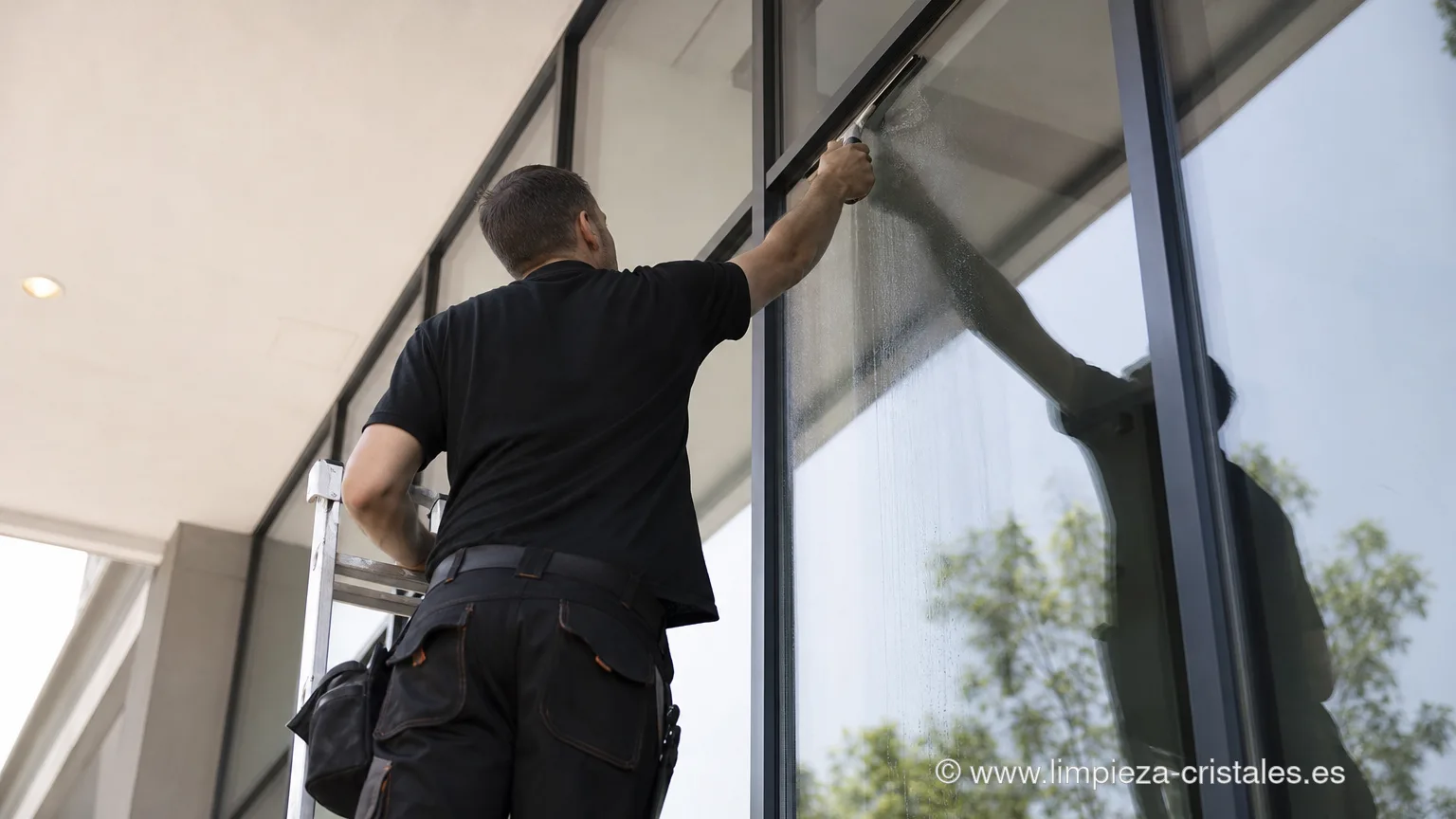
An operative who loses time changing a worn rubber blade, adjusting an incompatible pole or going back over marked glass is creating an operating cost that does not appear on the purchase invoice. This buying guide for cleaning companies is designed to help you choose professional tools according to more useful criteria: consistent performance, safety, ergonomics and continuity of use.
Buying on unit price alone generally works only for occasional jobs. In regular window cleaning, communal property maintenance, shopfronts, offices or façades, equipment must perform over many working days and allow worn parts to be replaced without having to replace the entire setup. This difference affects productivity, the image of the service and the margin on each contract.
Buying guide for cleaning companies: start with the actual job
Before comparing models, it is worth defining where and how the equipment will be used. An operative working indoors does not need the same equipment as a team cleaning exterior windows at various heights. Work frequency, the type of dirt, access and the size of the panes determine the right configuration.
Indoors, the priority is usually control: lightweight tools, manageable buckets, washers that hold cleaning solution effectively and a window squeegee that glides consistently. On shopfronts and large glazed surfaces, speed of progress and the ability to switch between channel widths without losing precision around frames and corners are particularly important.
For exterior work or work at height, the analysis changes. The pole must provide reach without becoming difficult to control, and every connection between the handle, adapter and head must be compatible. A successful purchase is not about assembling separate accessories, but about creating a system in which the components work together.
Calculate the cost per service, not just the purchase price
An inexpensive tool may seem convenient until it leaves marks, deforms, requires repeated passes or has no replacement parts available. By contrast, a quality rubber blade installed correctly can extend the useful life of the channel, improve the finish and reduce touch-up time. Savings do not come solely from paying less, but from cleaning more square metres of glass with the same effort.
Training time must also be considered. An intuitive, well-balanced system with consistent dimensions makes it easier for several operatives to maintain a uniform working method. This is particularly relevant for companies with staff turnover or services distributed across different sites.
Product families that should form the basis of your operation
A professional setup does not need to include every available accessory in the first order. It should, however, cover the complete process: wetting the glass, removing the film of water, dealing with adhered dirt, reaching the work areas and replacing worn consumables.
The basic set for manual window cleaning usually starts with a washer, a window squeegee, a stable bucket and suitable cloths for finishing touches. From there, channels of different sizes, handles suited to the type of movement and rubber blades adapted to the conditions of use can be selected. For frequent work, having two or three channel widths avoids forcing a large tool into narrow windows or making multiple passes on wide panes.
Scrapers should be treated as a specific tool for removing adhered residue when the surface and procedure allow it. They do not replace a window squeegee and should not be used indiscriminately. The quality of the holder, the way the blade is secured and the safe replacement of consumables all directly affect control of the job.
Washers, channels and rubber blades: the finish depends on the complete setup
It is common to blame the window squeegee for a poor result when the problem lies in the complete combination of tools. A washer that distributes too little solution means having to work over the glass repeatedly. A rubber blade with a worn edge leaves lines or residual water. A channel that does not match the width of the pane makes turning more difficult and increases wrist strain.
The choice of rubber blades deserves particular attention. For continuous professional use, it is important to keep replacements available and establish a replacement schedule before wear affects the finish. Do not wait until the rubber blade fails completely: a part that leaves marks can turn an efficient service into a series of touch-ups.
When placing the initial order, it is sensible to include enough consumables to maintain operations, without tying up money in unnecessary stock. The quantity depends on the workload, the number of operatives and how easily replacements can be obtained. The aim is not to stockpile, but to prevent downtime caused by a low-cost component.
Professional poles: reach, rigidity and compatibility
A telescopic pole extends the working range, but not every situation requires the same length or level of rigidity. For work at low and medium heights, a manageable pole may provide better control than an unnecessarily long setup. As reach increases, weight, flex and the convenience of the locking mechanisms become more important.
A pole that is too heavy tires the operative and reduces precision, especially during prolonged jobs. One that is excessively flexible may transmit movement to the head less effectively. It is therefore advisable to select the length normally used, rather than focusing only on the maximum theoretical height to be reached.
Before adding brushes, joints, cones or adapters, confirm compatibility between the end of the pole and the accessories. This avoids duplicate purchases and improvised solutions on site. Unger professional systems allow scalable equipment to be built, provided the configuration is planned from the outset.
When to consider pure-water systems
Pure-water systems for professional window cleaning make sense when there are large exterior surfaces, difficult access or a recurring need to work with a pole. Their purpose is to facilitate the washing and rinsing of windows, frames and certain exterior surfaces, allowing them to dry without the usual manual water-removal process.
They are not an automatic solution for every service. The workload, access to the filling point, height, type of dirt and preparation required all need to be considered. On glass with adhered residue, building-site debris or accumulated dirt, pre-treatment may be necessary. The system delivers efficiency when it fits the work route, not simply because technology has been added.
The purchase should cover the complete setup: water-treatment equipment, hose, brush, compatible pole, connections and maintenance consumables. Choosing only the main unit without reviewing the peripheral components often delays commissioning and limits the expected performance.
Ergonomics and safety are also part of the purchase
Sustainable productivity is not achieved by asking operatives to work faster. It comes from reducing unnecessary movements, improving grip and avoiding awkward postures. Comfortable handles, stable buckets, transport supports and poles proportionate to the job help maintain a consistent pace throughout the working day.
Safety must be integrated into the purchasing decision from the outset. The reach of a tool does not replace an access assessment or established procedures for working at height. A pole can reduce the need for direct intervention at certain points, but each site requires an assessment of the ground, obstacles, pedestrian surroundings and control of the work area.
For purchasing managers, it is useful to listen to the operatives who will use the equipment. Their experience highlights details that do not always appear in a product specification: whether the lock can be operated while wearing gloves, whether the weight is manageable at the end of a shift or whether a replacement part can be changed without wasting time.
Plan replacements and support before placing the order
A cleaning company does not buy a window squeegee or a pole to use it once. It buys continuity for the system. That is why it is worth checking from the outset which rubber blades, washer sleeves, blades, channels, handles and adapters are available for each selected tool.
Standardisation is often a good decision when several operatives are involved. Working with compatible product families reduces the number of references, simplifies training and makes it easier for one operative to temporarily replace a component from another team member’s equipment without disrupting the service. Even so, a single size should not be imposed for every job: standardisation means limiting unnecessary combinations, not giving up the right tool.
Technical support is particularly valuable with pole and pure-water systems. Access to advice from an Unger SAT in Spain helps resolve configuration, compatibility and maintenance queries before equipment reaches the workplace. At Limpieza Cristales Unger, this expertise is focused on selecting the right tools and replacement parts for each professional application.
How to turn a one-off purchase into profitable equipment
The best purchase is not the one that fills the storeroom, but the one that handles the expected services with fewer problems. Start by identifying your most frequent jobs, equip those scenarios with consistent sizes and accessories, and add specialist capacity when the workload or height justifies it.
Then review performance during the first few weeks: completion times, the need for touch-ups, rubber-blade wear, pole comfort and the frequency of consumable replacement. This information allows you to refine the next order using your own data rather than assumptions.
When a tool fits the way your team works, the difference can be seen on every finished pane: less improvisation, less reworking and an operation prepared to maintain its service level.